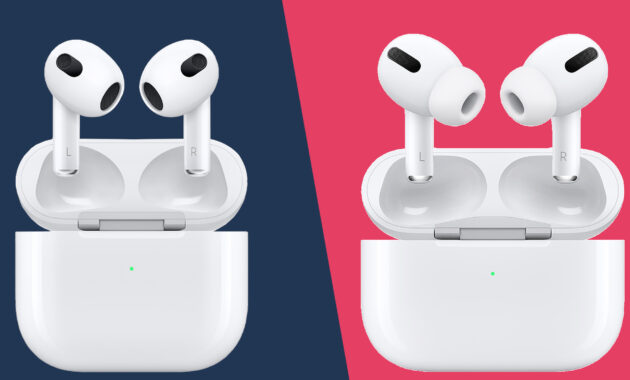
Apple’s wireless earbud lineup has never been more competitive—or more confusing. With the release of the flagship AirPods Pro 3 and the surprisingly capable AirPods 4 with Active Noise Cancellation (ANC) , Apple fans face a tough decision. The standard AirPods 4 now borrow premium features once reserved for the Pro line, blurring the lines between the models .
Both earbuds leverage the power of the H2 chip to deliver seamless iOS integration, Spatial Audio, and now, noise cancellation. But with a $70 price gap—and significant differences in design and endurance—choosing the right pair is critical .
After extensive hands-on testing, we’ve compared these two models across fit, sound quality, battery life, and exclusive features to determine which earbuds deserve a spot in your ears.
At a Glance: The 10,000-Foot View
Before diving into the weeds, here is the executive summary for shoppers in a hurry:
- AirPods 4 with ANC ($179): Best for users who hate silicone tips. They offer surprising noise cancellation in an open, breathable design. However, the short battery life with ANC (4 hours) is a major drawback .
- AirPods Pro 3 ($249): The overall champion. They double the battery life, offer superior noise isolation thanks to in-ear tips, and introduce groundbreaking health features like heart rate monitoring .
Head-to-Head: Detailed Comparison
To truly understand where your money goes, we broke down every major category based on our lab tests and real-world usage.
Price and Value
The pricing structure is straightforward, but sales often change the equation. The AirPods 4 with ANC are positioned as the “mid-range” marvel, while the Pro 3 sits firmly in the premium segment .
Winner: AirPods 4 with ANC (for budget-conscious buyers) .
Design, Fit, and Durability
This is the most fundamental difference between the two. The AirPods 4 retain the classic open-ear design that rests in the ear concha without penetrating the canal. The AirPods Pro 3 use a in-canal design with new foam-infused eartips available in five sizes (including a new XXS) .
- Comfort: The AirPods 4 are slightly more comfortable for all-day wear because they lack the “plugged” sensation .
- Stability: The Pro 3 are more secure for workouts and vigorous activity.
- Durability: The Pro 3 feature a superior IP57 rating (resistant to sweat and brief submersion), compared to the IP54 rating of the AirPods 4 (dust and splash resistant only) .
Winner: Tie (Depends entirely on user preference for fit) .
Noise Cancellation: The Open-Ear Experiment
Placing active noise cancellation in an open earbud is a feat of engineering, and the AirPods 4 with ANC perform admirably. They effectively dull low-frequency noises like engine rumbles and HVAC systems, allowing you to hear music clearly in a café without feeling sealed off from the world .
However, the AirPods Pro 3 are in a different league. By combining the physical seal of the new foam tips with upgraded ultra-low-noise microphones, Apple claims ANC is twice as effective as the previous generation. In our tests, the Pro 3 silenced office chatter, roadworks, and airplane noise almost entirely, matching the performance of class leaders like Bose .
Sound Quality
Both earbuds use the H2 chip and support AAC and SBC codecs. However, the acoustic experience diverges due to design.
The AirPods 4 offer a spacious soundstage with clear mids and highs, typical of open designs. The AirPods Pro 3, however, deliver a wider dynamic range. The seal allows for deeper bass response and better detail retrieval, making them the choice for audiophiles on the go. The Pro 3 also boasts 5GHz connectivity for potential lossless audio with the Apple Vision Pro .
Winner: AirPods Pro 3.
Battery Life
This category was a blowout. The compact size and power demands of the ANC system in the AirPods 4 limit their continuous playback to just 4 hours with ANC enabled. The AirPods Pro 3 last a full 8 hours on a single charge with ANC on—double the stamina .
Exclusive Features: The “Pro” Advantage
The software and hardware divide is where the Pro 3 justify their premium price tag.
- Heart Rate Monitoring: The AirPods Pro 3 are equipped with photoplethysmography (PPG) sensors, allowing them to track your heart rate during workouts via the Apple Fitness app. This is a game-changer for fitness enthusiasts without an Apple Watch .
- Case Functionality: While both cases are small, the Pro 3’s case includes a U2 chip for Precision Finding (with a built-in speaker for audible alerts) and supports MagSafe, making it easier to snap onto chargers .
- Controls: Only the Pro 3 offer touch-capacitive volume control on the stems. You can swipe up or down to adjust the loudness—a convenience the AirPods 4 lack .
Winner: AirPods Pro 3.
How to Choose: A Buyer’s Flowchart
Still unsure? Follow this simple guide:
- Do you despise silicone tips in your ears?
- Is battery life your top priority?
- Do you work out and want health tracking?
How to Get the Most Out of Your AirPods
Once you’ve made your choice, follow this guide to optimize your new earbuds.
For AirPods Pro 3 Users:
- Perform a Fit Test: Go to Settings > Bluetooth > Tap the “i” next to your AirPods > Ear Tip Fit Test. Ensure you have a good seal for optimal bass and ANC.
- Enable Heart Rate Monitoring: Open the Fitness app on your iPhone and start a workout. The data will stream directly from your earbuds .
- Set Up Precision Finding: Ensure the Find My network is enabled so you can use the U2 chip to locate your case if misplaced .
For AirPods 4 with ANC Users:
- Optimize Fit: Because these lack tips, try gently twisting the earbuds so the stem aligns with your mouth. This improves microphone pickup and stability .
- Manage Battery: Since you only get 4 hours of ANC, use Adaptive Mode rather than full ANC in moderately noisy environments to save a bit of power .
- Use Gestures: Familiarize yourself with the force sensor pinches to control playback quickly, as you lack the volume swipe gesture found on the Pros .
Frequently Asked Questions (FAQs)
1. Can I use the AirPods 4 with ANC for working out?
Yes, but with caution. They have an IP54 rating, meaning they are sweat-resistant. However, they lack the secure in-ear fit and the higher IP57 rating of the Pro 3, so they might fall out during intense running or be damaged if you pour water on them .
2. Do the AirPods Pro 3 work with Android phones?
They work as basic Bluetooth earbuds. You can listen to music and use the controls, but you lose virtually all smart features: no automatic pairing, no spatial audio, no heart rate monitoring, and no firmware updates .
3. Is the Live Translation feature available on both?
Yes, both models support Live Translation when paired with an iPhone 15 or newer running iOS 26. However, this feature may be region-locked or delayed in some areas like the EU at launch .
4. Why does the Pro 3 have less total battery life with the case (24hrs vs. 30hrs)?
The Pro 3 prioritize longer continuous listening (8 hours vs. 4 hours). The case is physically smaller to maintain portability, so while the total hours are lower, you will take the earbuds out of your ears to charge them far less often than with the AirPods 4 .
5. Is there a “High-End” version of the Pro 3 coming?
Analysts suggest Apple might release a premium version of the AirPods Pro 3 later in 2026 featuring an infrared camera module for enhanced gesture control and deeper Vision Pro integration. However, this will be a higher-priced tier ($350-$450) sold alongside the current Pro 3, not a replacement .
The Verdict
There is a clear standout in this comparison. While the AirPods 4 with ANC are a technological marvel for achieving noise cancellation in an open design, they are a niche product for those who prioritize breathability over everything else.
The AirPods Pro 3 are the superior wireless earbuds. They offer double the battery life, class-leading noise cancellation, a more secure fit for active lifestyles, and the innovative heart rate sensor. For the majority of users, the extra $70 is an investment in a device that truly does it al
