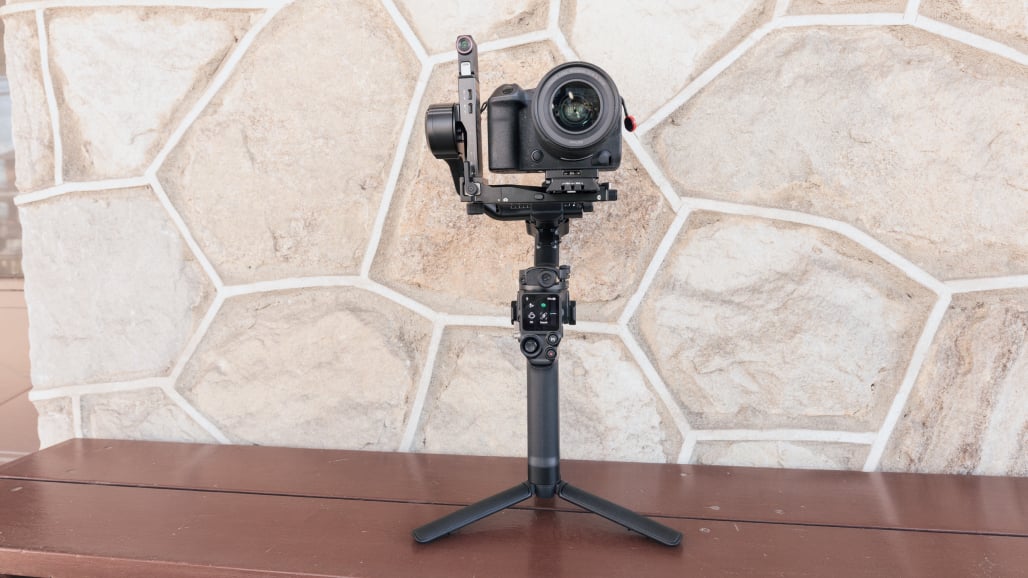
The DJI RS 5 elevates professional video stabilization with smarter tracking, longer battery life, and effortless balancing for mirrorless cameras. Released in early 2026, it builds on the RS 4’s success, making it ideal for solo filmmakers chasing cinematic shots worldwide.
Key Features Overview
The RS 5 boasts a 3kg payload capacity, supporting setups like Sony A7S III or Canon R5 with lenses. Its 5th-gen RS algorithm delivers 50% more torque for smoother stabilization in dynamic scenes.
Enhanced Intelligent Tracking via the magnetic RS module tracks people, pets, or vehicles up to 10m away. Tap the touchscreen to lock on subjects, with AR overlays for precise composition—no extra apps needed.
Battery life hits 14 hours standard or 30 hours with the BG70 grip, charged fully in 1 hour via 65W PD. Native 3rd-gen vertical shooting flips setups in seconds for social media creators.
Full Specifications Table
This table highlights why the RS 5 suits global creators from vloggers in Mumbai to filmmakers in LA.
Design and Build Upgrades
Weighing just 1.46kg fully loaded, the RS 5 feels premium with Teflon interlayers and fine-tuning knobs on each axis. Balancing takes minutes, not hours—ideal for fast-paced shoots.
The electronic briefcase handle adds single-handed control with a joystick for pan/tilt. 2nd-gen automated axis locks secure arms on power-off, speeding storage and setup by 50%.
Z-axis indicator provides real-time feedback on tilt, ensuring level horizons during walks. NATO rails enable modular arms for LiDAR Focus Pro compatibility, boosting low-light autofocus.
Performance in Real-World Tests
In hands-on tests, the DJI RS 5 excels at tracking dancers or runners, reacquiring subjects if they dip out of frame. Enhanced modes outperform RS 4 in vertical holds and low light.
Follow modes like Pan Follow or FPV shine for action sports, with customizable joystick speeds. Users report buttery footage at walking pace, rivaling $5,000 rigs.
Battery endurance powered 8-hour wedding shoots without recharge. Torque handles wind or uneven terrain, making it a beast for travel vloggers worldwide.
Comparison: DJI RS 5 vs RS 4 vs RS 4 Mini
The DJI RS 5 justifies upgrades with 30% faster setup and superior tracking, but RS 4 Mini wins for budget portability.
How to Set Up DJI RS 5: Step-by-Step Guide
Step 1: Unbox and Assemble
Mount your camera via quick-release plate. Attach the battery grip—power on via the side button.
Step 2: Balance the Gimbal
Loosen axis knobs, slide camera forward/back. Use fine-tune dials for micro-adjustments; Z-axis light confirms level.
Step 3: Install Tracking Module
Snap the magnetic RS Enhanced module onto the gimbal. Swipe right on the touchscreen for live feed—tap to track.
Step 4: Customize Settings
In Ronin app: Set follow speed (medium for walks), joystick sensitivity (high for precision). Enable Bluetooth shutter for wireless control.
Step 5: Test Modes
- PF Mode: Basic following.
- FPV: Full 360° freedom.
- Track: Lock on subjects up to 10m.
Pro tip: Calibrate in open space for best torque. Full setup under 5 minutes.
Pros and Cons
Pros:
- Magnetic tracking simplifies solo shoots.
- Epic battery and fast charge for globetrotters.
- Tool-free balancing saves time.
Cons:
- 3kg limit skips heavy cinema lenses.
- Module sold separately in standard kit ($99 extra).
- Learning curve for advanced modes.
Overall, pros dominate for 90% of users.
Who Should Buy the DJI RS 5?
DJI RS 5 Perfect for YouTubers, wedding videographers, and travel creators needing pro stabilization without crews. Pairs best with mirrorless under 3kg like Sony FX3 or Nikon Z6 III.
Skip if you’re on ultra-light phones (get Osmo Mobile) or cinema rigs (Ronin 2S). Worldwide availability via DJI stores or Amazon.
Pricing and Where to Buy
Standard kit: ~$679. Combo with tracking module: ~$829. Battery grip extra: $99. Check DJI.com for bundles; prices vary by region (India ~₹55,000).
Best Tips for Cinematic Footage
- Balance perfectly—test walk with Z-indicator green.
- Use medium follow speed for natural pans.
- Track in vertical for Reels; module handles gestures too.
- Pair with Focus Pro for LiDAR AF in dim light.
These tweaks yield Hollywood-grade results.
FAQs
Is DJI RS 5 worth upgrading from RS 4?
Yes, for tracking and battery gains; no if budget-tight. 20-30% workflow boost.
What cameras work with RS 5?
Sony A7/A1 series, Canon R5/R6, Nikon Z8/Z6, Panasonic GH6, Fujifilm X-H2S via Bluetooth/USB.
How long does the battery last?
14 hours standard; extend to 30 with BG70 for multi-day trips.
Does it support vertical video natively?
Yes, 3rd-gen switch rotates in seconds—no adapters.
RS 5 vs Zhiyun Crane?
RS 5 wins on ecosystem and tracking reliability.
Waterproof?
No, but weather-sealed for light rain.
